
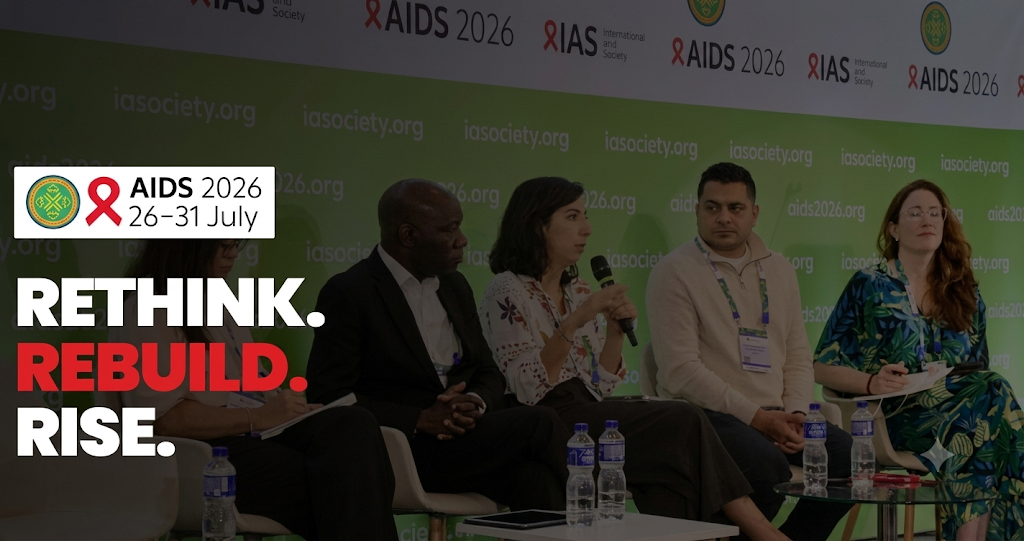
Rio de Janeiro | AIDS 2026
For ITPC-MENA, being at AIDS 2026 was about more than attending a global conference. It was about making sure that the Middle East and North Africa region — too often underrepresented in global HIV conversations — was visible, heard and part of the discussions shaping the future of the response.
Across six days in Rio de Janeiro, ITPC-MENA brought community evidence, advocacy priorities and regional perspectives into conversations on community-led monitoring, access to medicines, long-acting PrEP and partnerships.
Four areas, one shared question : how can communities in MENA have a stronger role in shaping the HIV response and ensuring that progress translates into equitable access ?
Community-led monitoring : turning community evidence into accountability
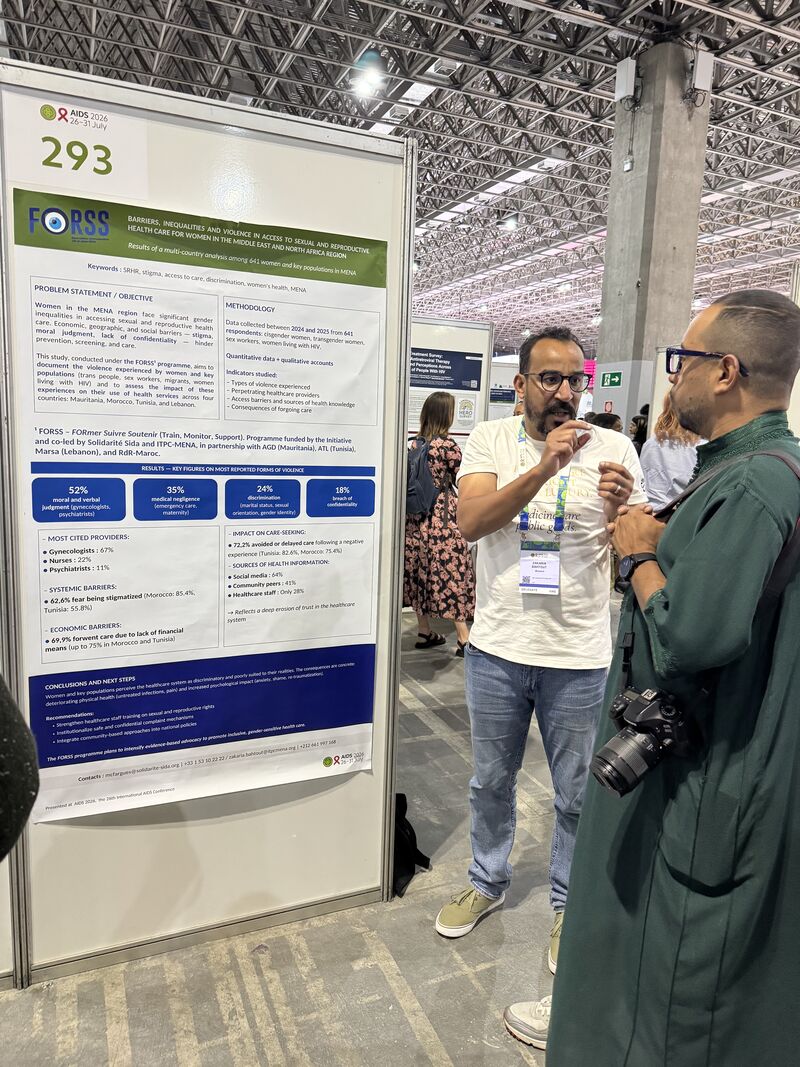
Since 2018, FORSS has developed community observatories that document barriers to healthcare access and turn communities’ lived experiences into evidence for advocacy and dialogue with decision-makers.
AIDS 2026 in Rio provided an opportunity to bring this evidence to the international stage, with the presentation of the second regional report on barriers to healthcare access for women. Based on quantitative and qualitative research with 641 women from key populations in Morocco, Mauritania, Tunisia and Lebanon, the study highlights the discrimination and intersecting forms of exclusion that hinder access to healthcare and puts forward concrete recommendations for change.
This progress reflects the growing legitimacy of community-led monitoring. In just a few years, an approach that was once met with scepticism has become a recognised mechanism among the Ministries of Health of all four countries. The next challenge is ensuring its sustainability: how can these mechanisms become an enduring part of national HIV responses, beyond time-bound projects and donor funding cycles ?
Malawi offers a concrete example of what this transition can look like. Community-led monitoring is now implemented across all 28 districts, with nearly US$1 million in public funding mobilised to sustain it. This is a trajectory the MENA region can progressively consider.
At Rio, this discussion on the role of community-generated evidence was also central to ITPC-MENA’s engagement. During the pre-conference session HIV Treatment at a Crossroads, Hiba El Khamal, Executive Director of ITPC-MENA, highlighted the importance of community data in keeping civil society at the table as a credible and evidence-based interlocutor, particularly in contexts where civic space is shrinking.
ITPC-MENA also hosted a dedicated session on community-led monitoring in the region and brought MENA’s experience to the CLM Skills Lab organised by ITPC Global, alongside activists from South Africa, Malawi and Guatemala.
The experience of FORSS points to a broader lesson : community-led monitoring is not simply about collecting data. It is about building accountability mechanisms that bring communities’ realities into view — and turn what health systems may fail to see into evidence for action.

Access to medicines: challenging the price of inequality
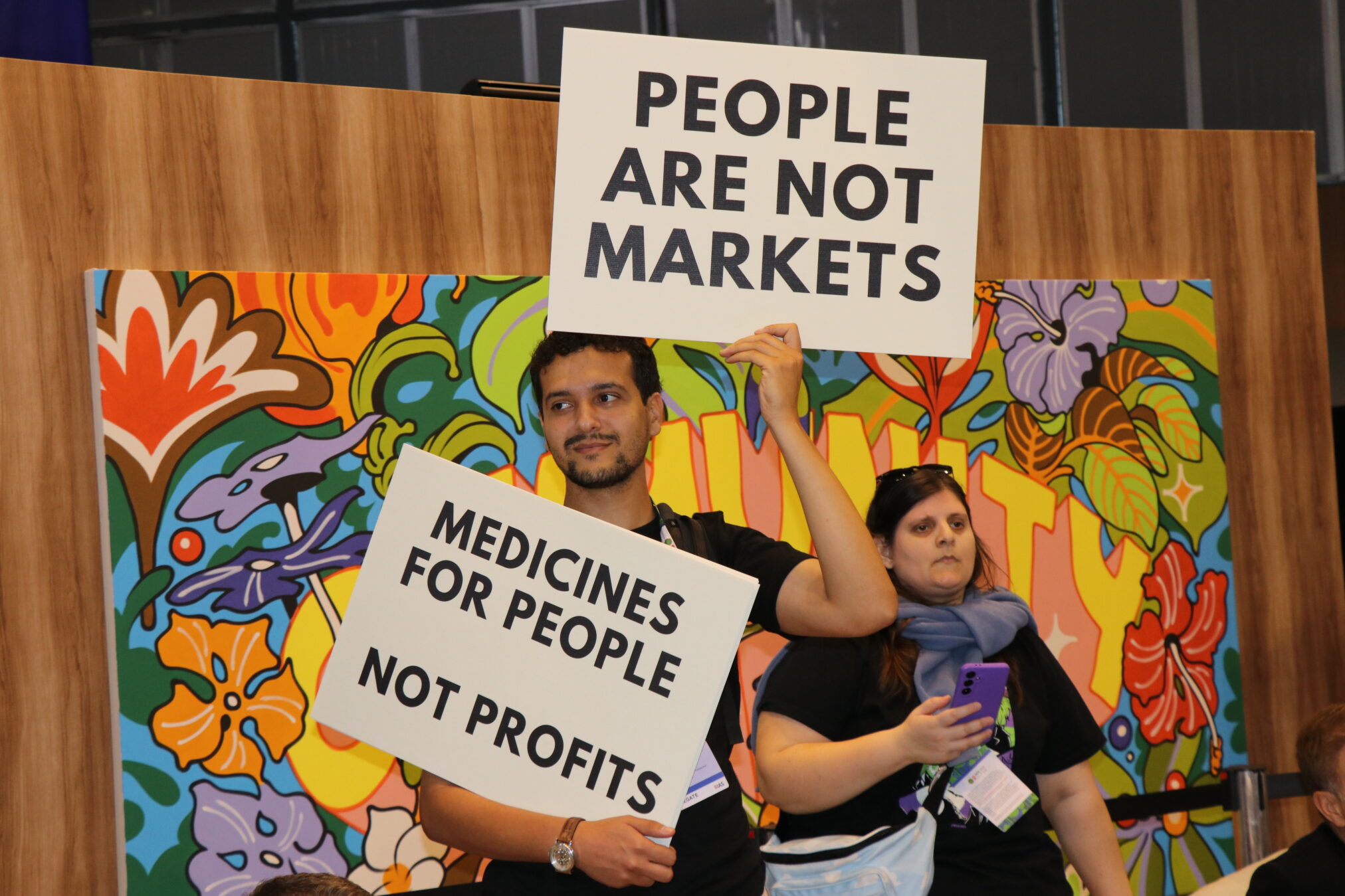
At AIDS 2026, ITPC-MENA also joined the Make Medicines Affordable coalition in bringing the question of medicine prices into the spotlight through Pharma Privé.
Designed as a luxury boutique, the installation deliberately presented medicines as high-end commodities — reflecting the gap between production costs and the prices at which people access them.
The figures speak for themselves: lenacapavir costs approximately $25 to produce, compared with $28,000 a year to access. Cabotegravir costs approximately $15 to produce, compared with $25,000 a year to access.
The boutique’s closing message captured the point: medicines are not handbags, watches or collector’s items. They are public goods that save lives.
By the end of the week, Pharma Privé moved beyond the booth and onto the exhibition floor, with engagements involving Gilead, ViiV and Merck. ITPC-MENA was part of the delegation, carrying the same message into these conversations: access to medicines should not depend on the country in which a person is born.
Long-acting PrEP: hope, and a region that refuses to be an afterthought
Morocco is set to become the first country in the MENA region to roll out injectable PrEP, marking an important step forward in HIV prevention. For ITPC-MENA, however, this milestone also raises a critical question: how can the region ensure that new prevention options do not reproduce existing inequalities in access?
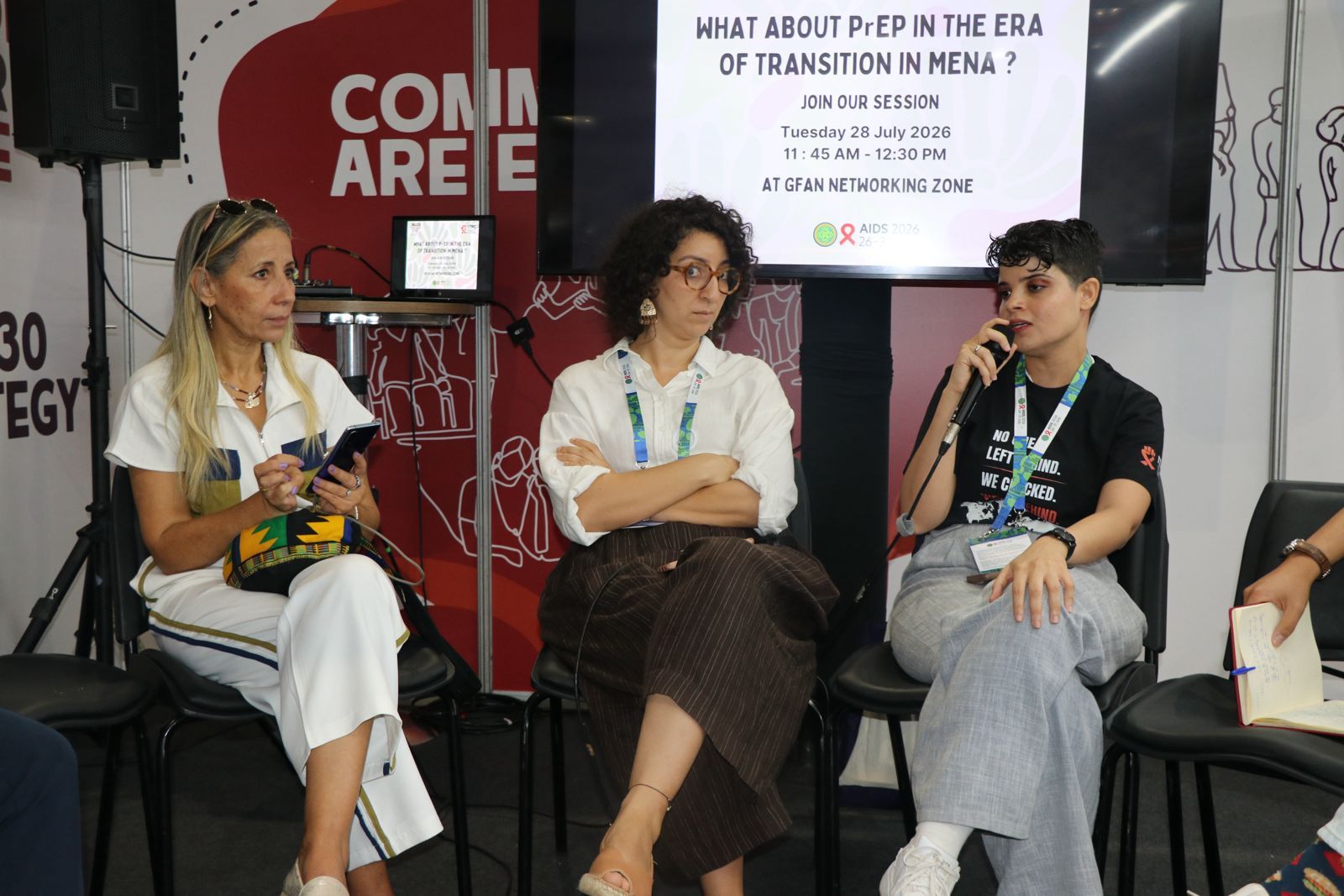
This question was at the heart of the session “What About PrEP in the Era of Transition in MENA?”, co-hosted by ITPC-MENA and ALCS at the GFAN Networking Zone. The discussion brought together regional perspectives on what this shift in HIV prevention could mean for communities and health systems across MENA.
As Othmane Marrakchi, ITPC-MENA Advocacy Lead, explained, the region faces specific barriers to ensuring equitable access to these new prevention options. Regulatory pathways, affordability, availability and health-system readiness will all shape who can ultimately benefit.
Identifying these barriers early will be essential. Without deliberate action, innovations intended to expand prevention choices could remain out of reach for the people who need them most.
This means involving communities not simply as beneficiaries, but as actors in decisions about how new prevention tools are introduced, communicated and made accessible.
Dr. Fatim Zahra Hajjouji of ALCS emphasized the importance of adapting PrEP to the realities of populations across the region. Kods Brahmi of ATL MST SIDA Tunisia underscored a complementary principle: the transition towards new prevention modalities must happen with communities, not without them.
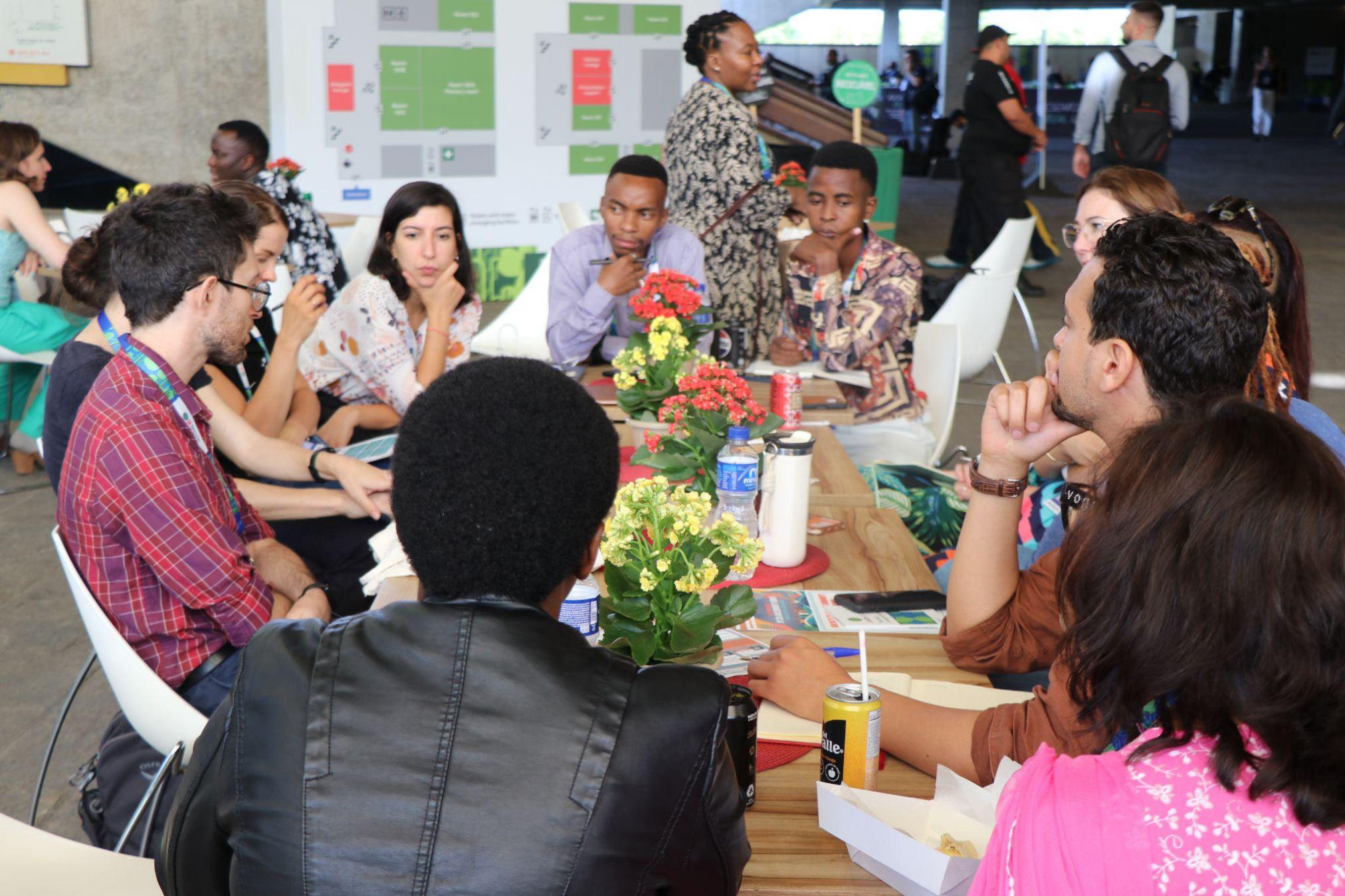
Partnerships: connecting evidence, advocacy and action
Before the conference, ITPC-MENA met with ITPC Global and the Global Advocacy Data Hub to align advocacy efforts, share data and explore joint action across the pre-, during- and post-Rio phases.
Partnerships were also explored in relation to the upcoming rollout of injectable PrEP in Morocco. As new prevention options become available, reaching key populations with accurate information and connecting people to services will be critical. In Rio, ITPC-MENA held constructive discussions with Grindr for Equality on how digital platforms could help address misinformation, demystify PrEP and connect communities with services.
These conversations are not an end in themselves. They are part of building relationships that can support advocacy and access beyond the conference.
AIDS 2026 gave ITPC-MENA a powerful platform to amplify MENA communities’ evidence, priorities, and perspectives and ensure they are heard in the global HIV conversation. From community-led monitoring and access to medicines to long-acting PrEP and strategic partnerships, Rio reinforced one message: MENA cannot be an afterthought in the global HIV response.
The region has evidence to share, challenges to address and, above all, communities whose voices must shape what comes next.
Call for Action at AIDS 2026
ITPC-MENA joined community and civil society organizations in endorsing a joint position statement developed by GADH, Impact Santé Afrique and GFAN Africa. The statement calls for stronger HIV financing, direct support to communities, meaningful participation and accountability to protect access to life-saving services. Read the full statement